

The Cultural Appropriation of
“Drag Hula”
by DeSoto Brown
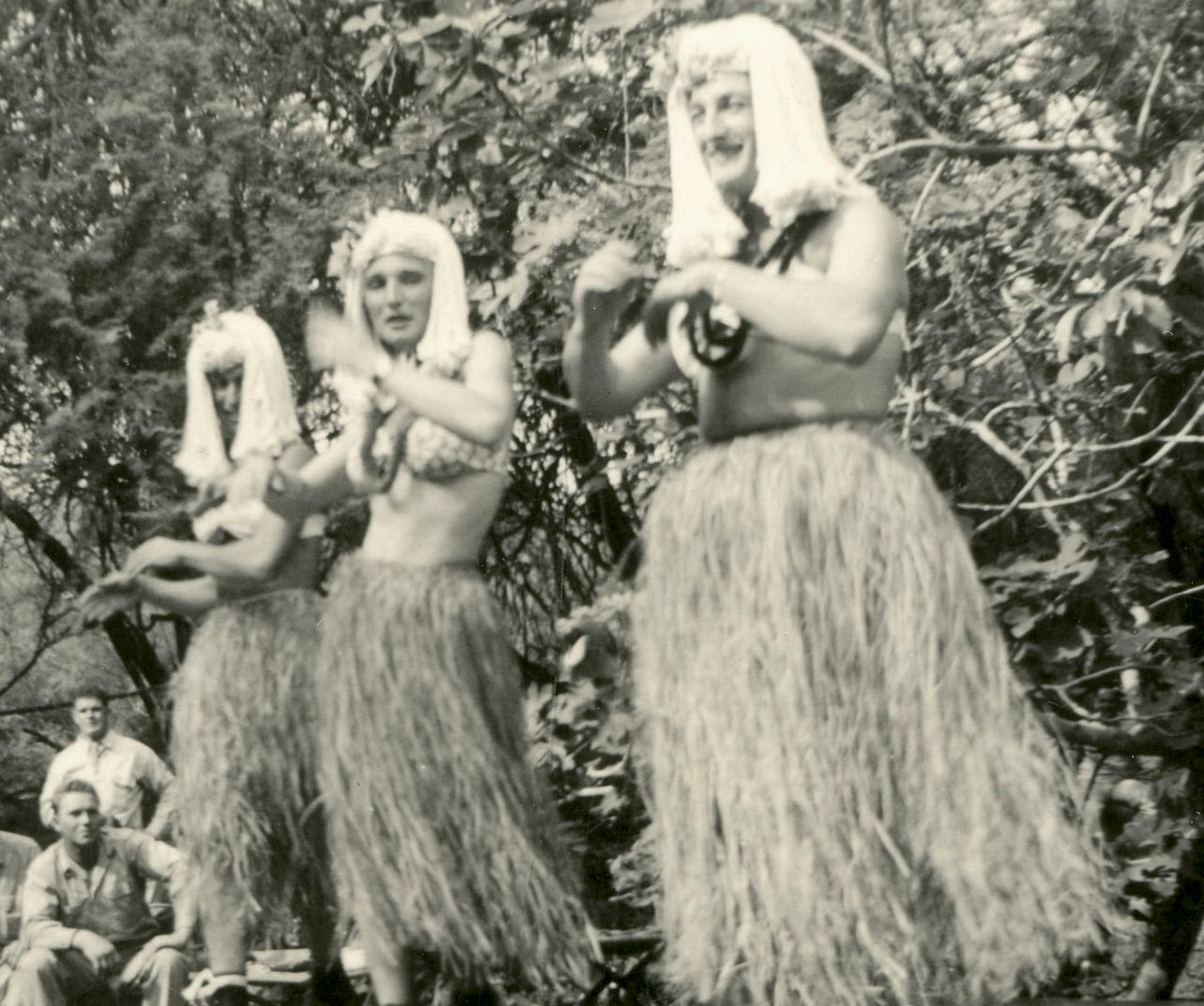
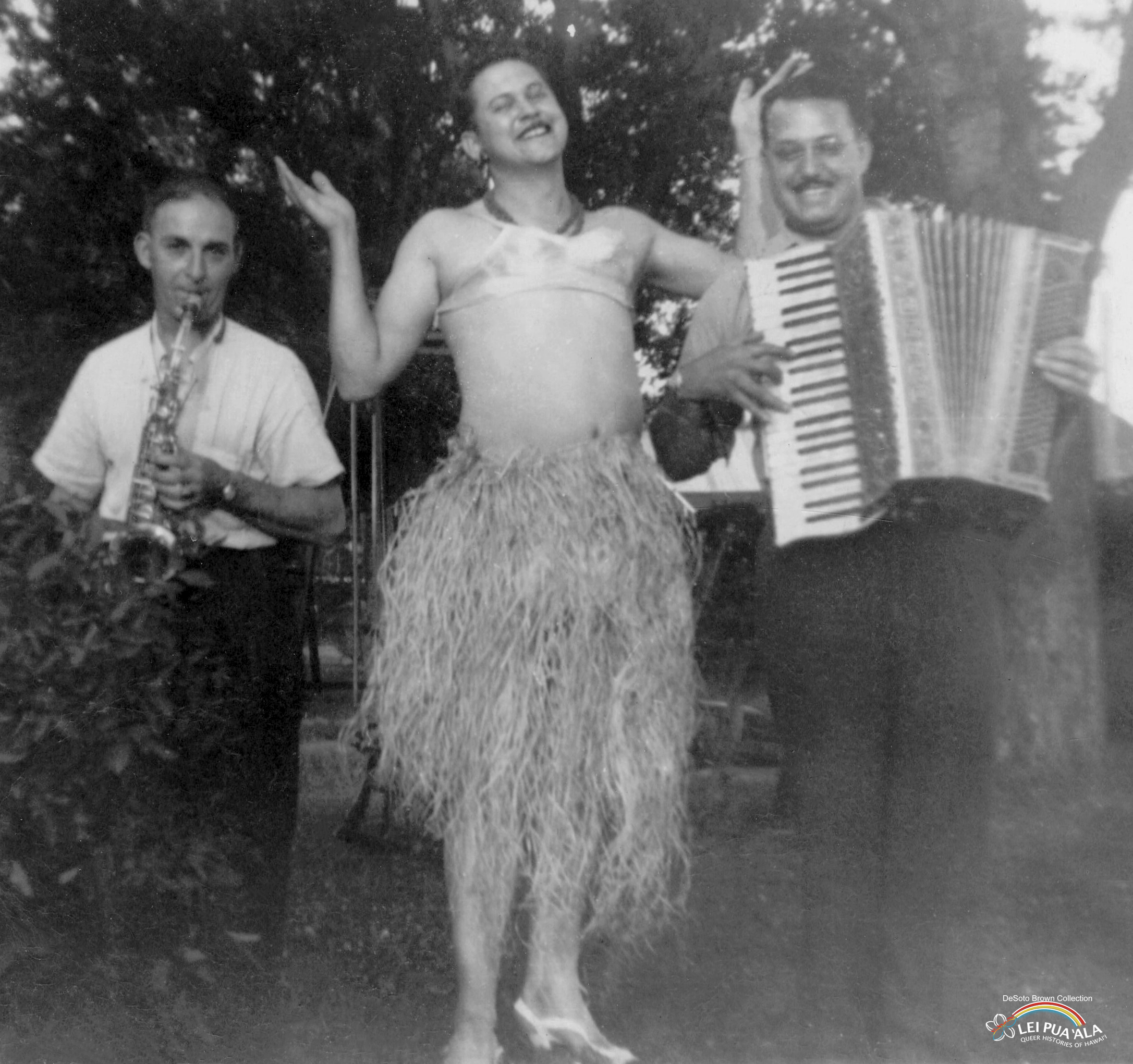
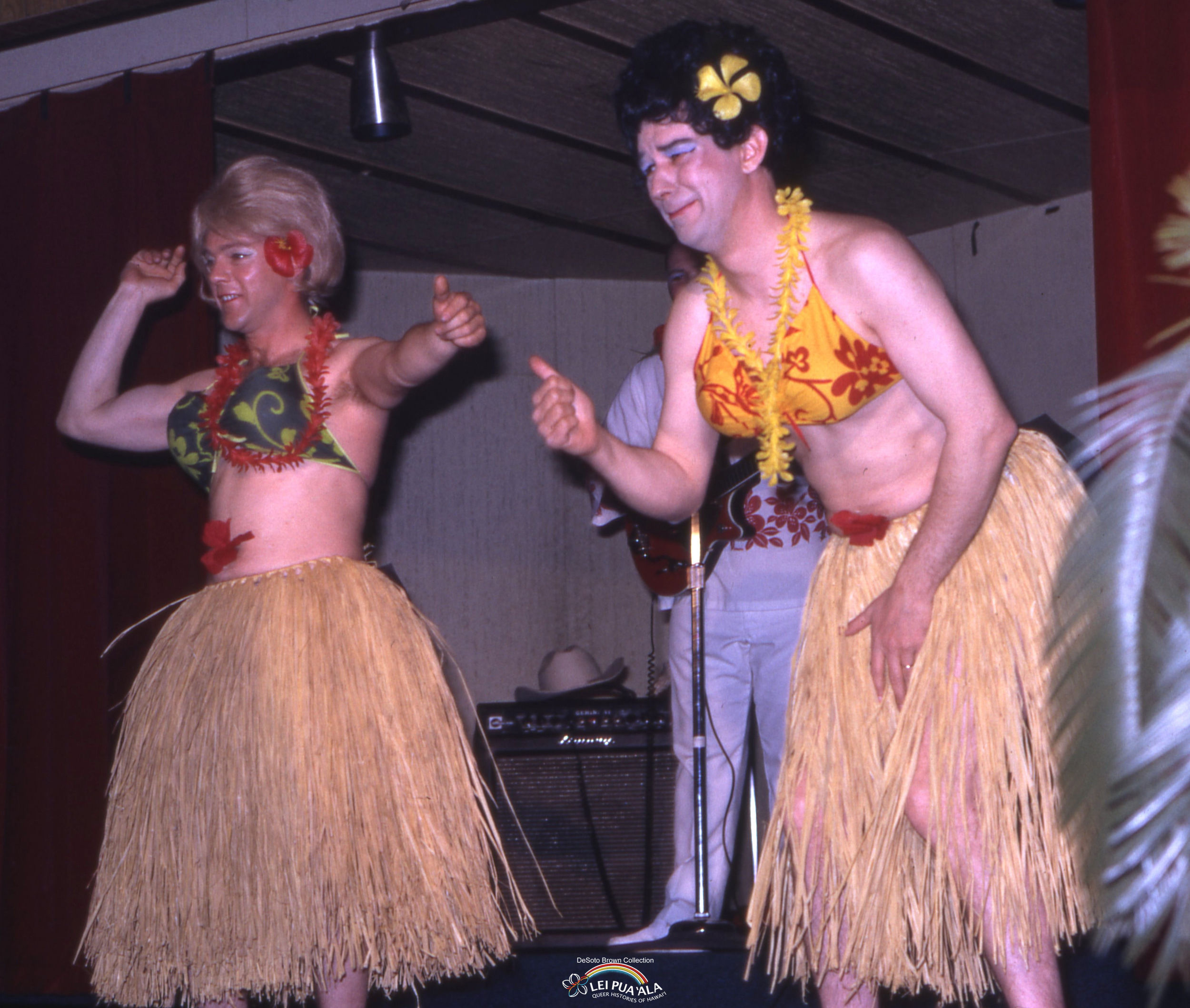
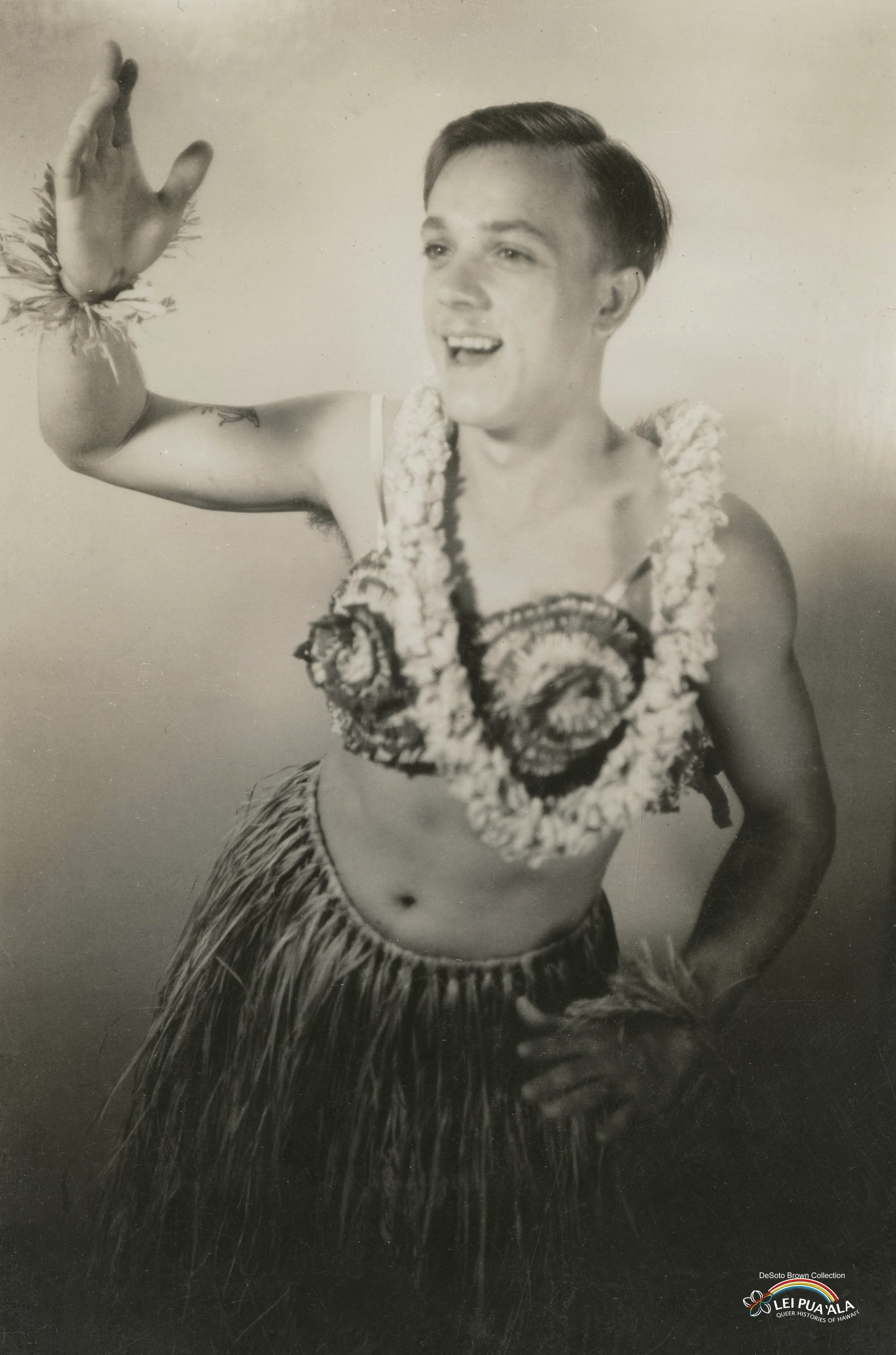
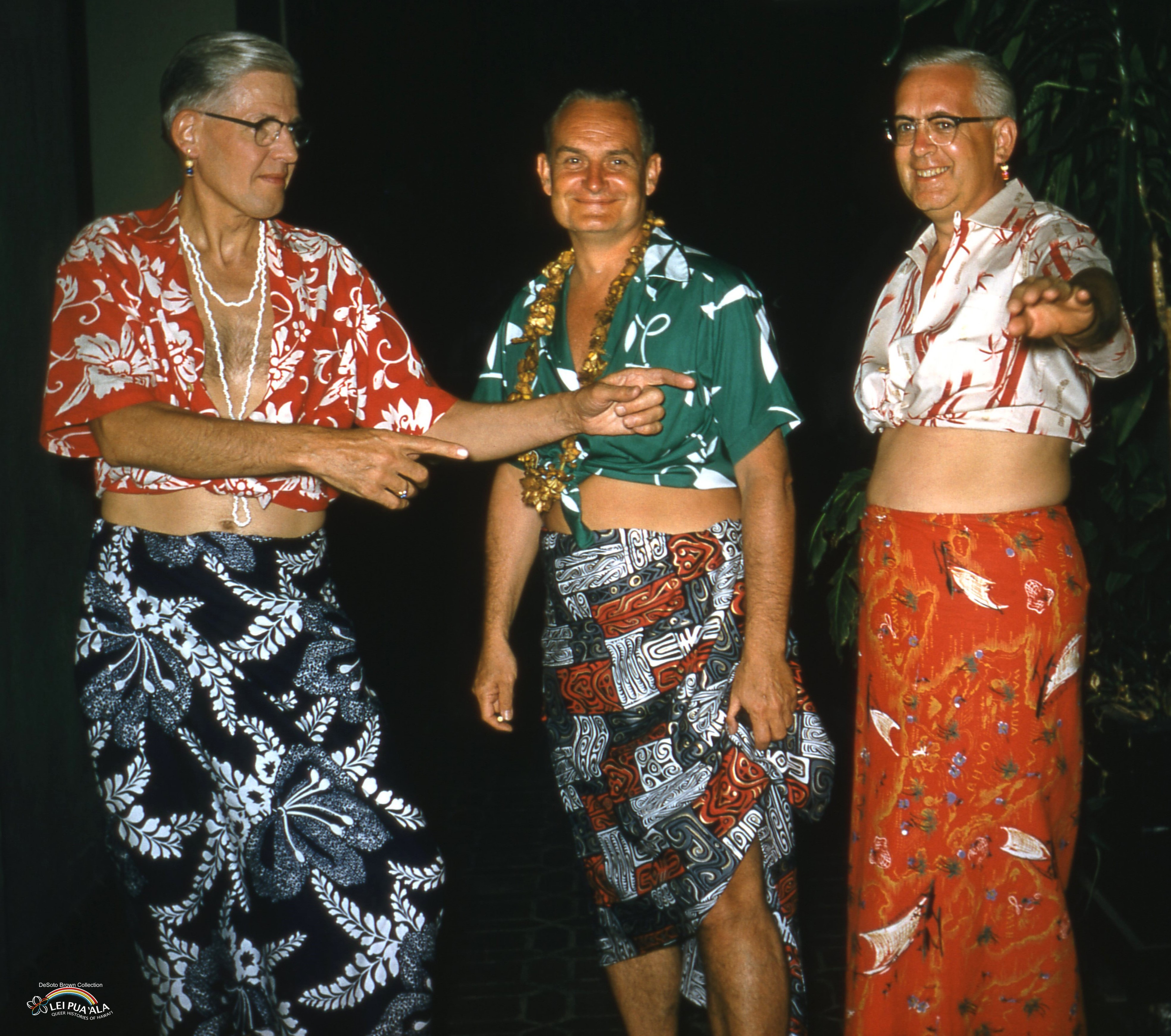
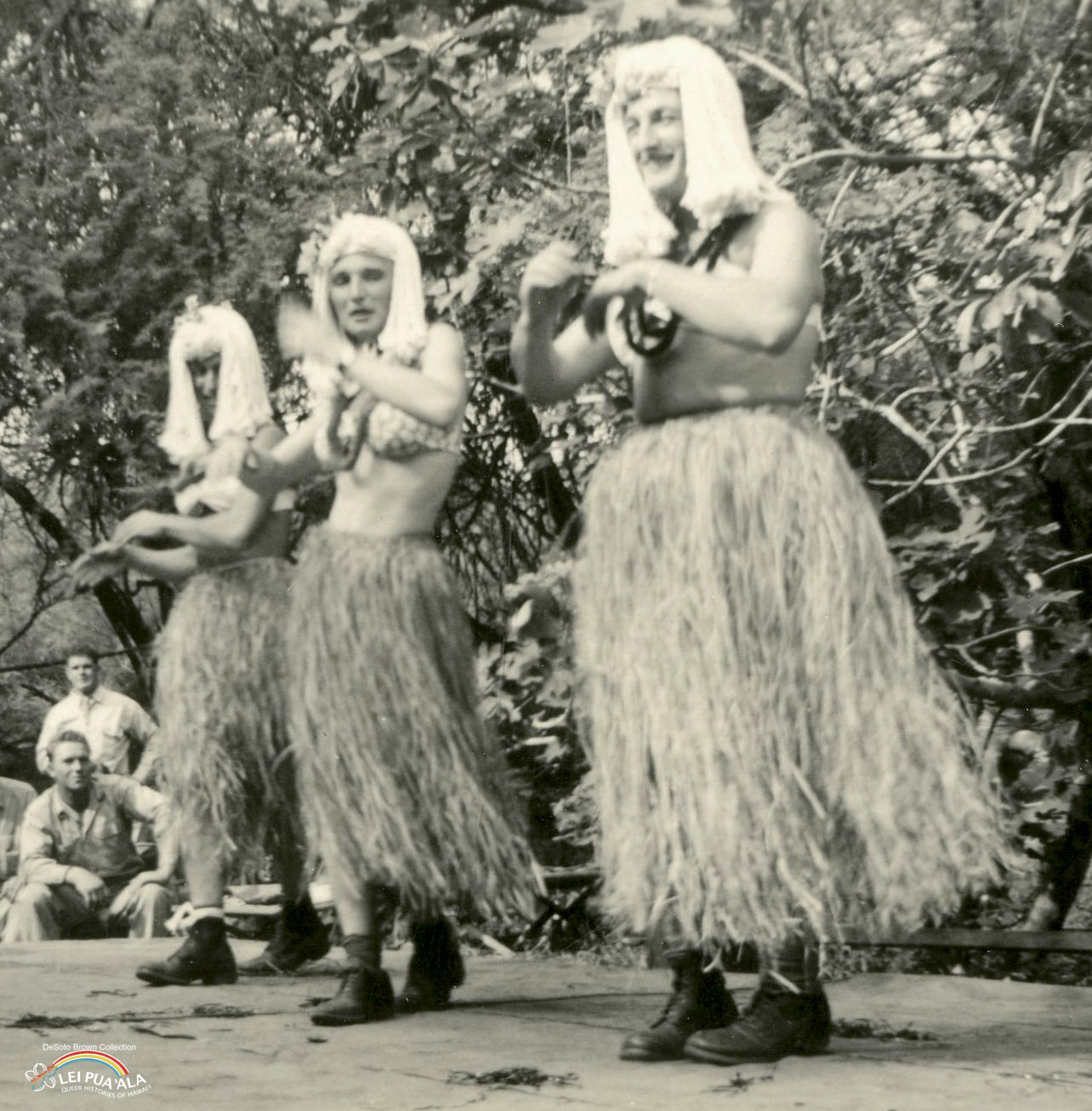
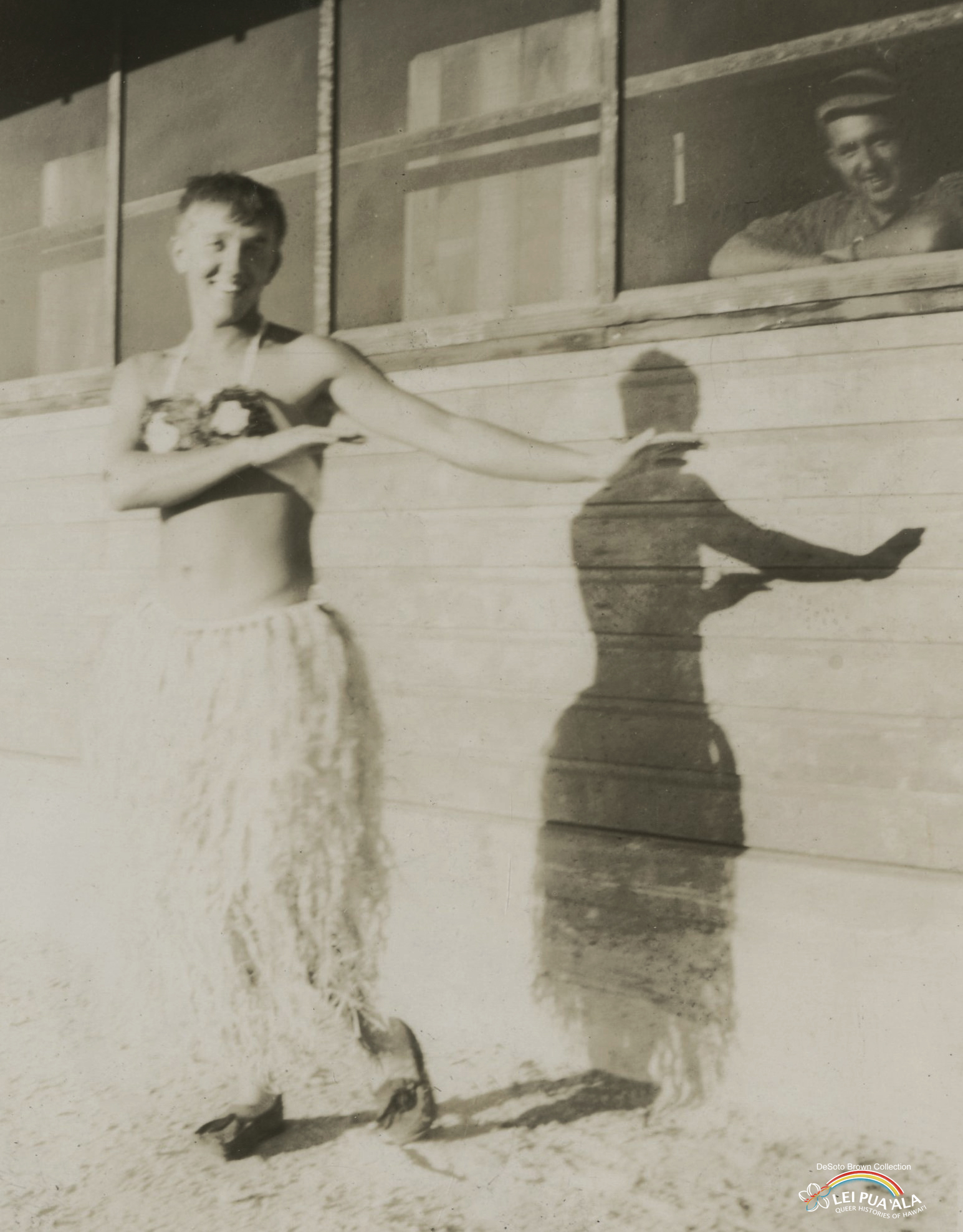
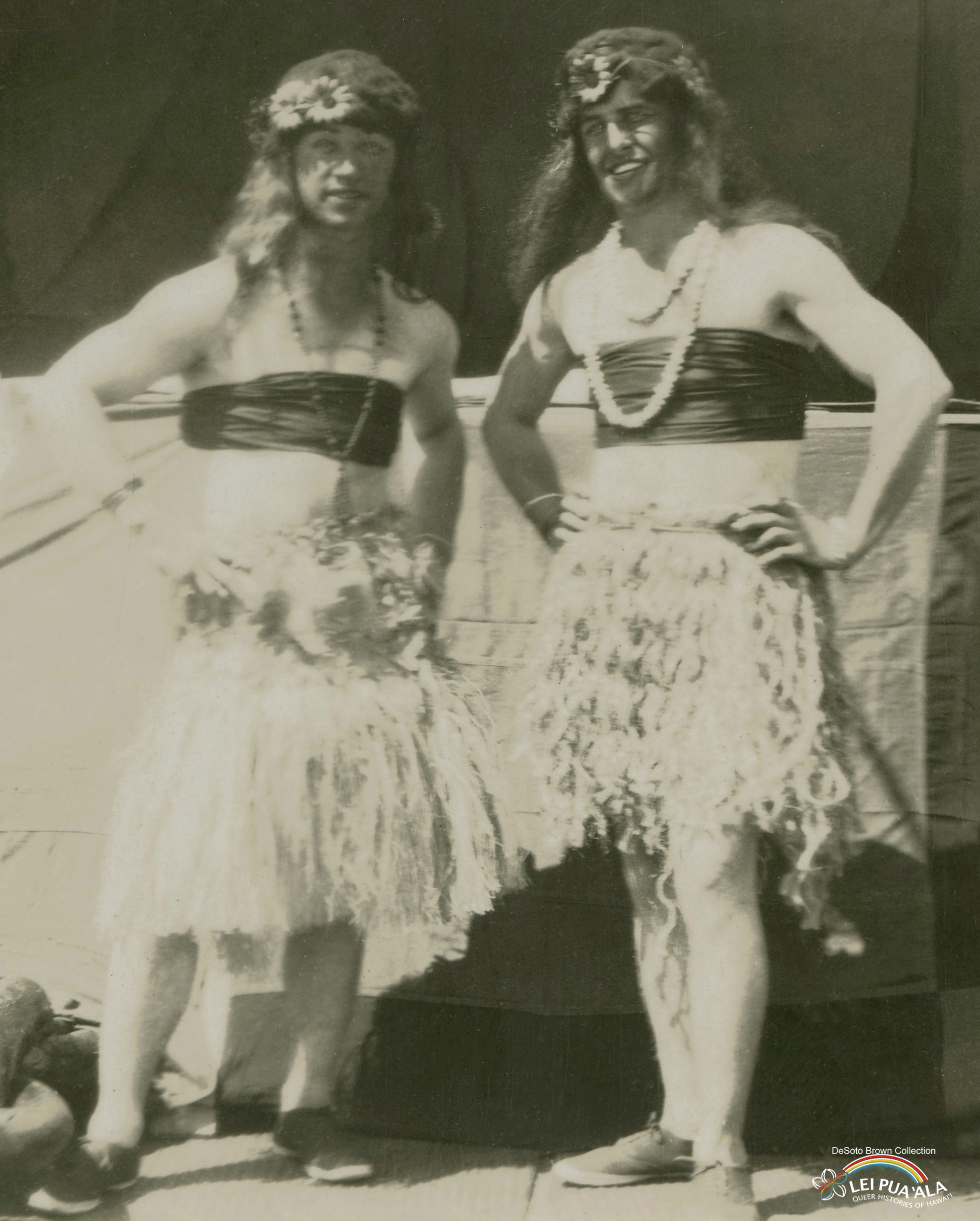
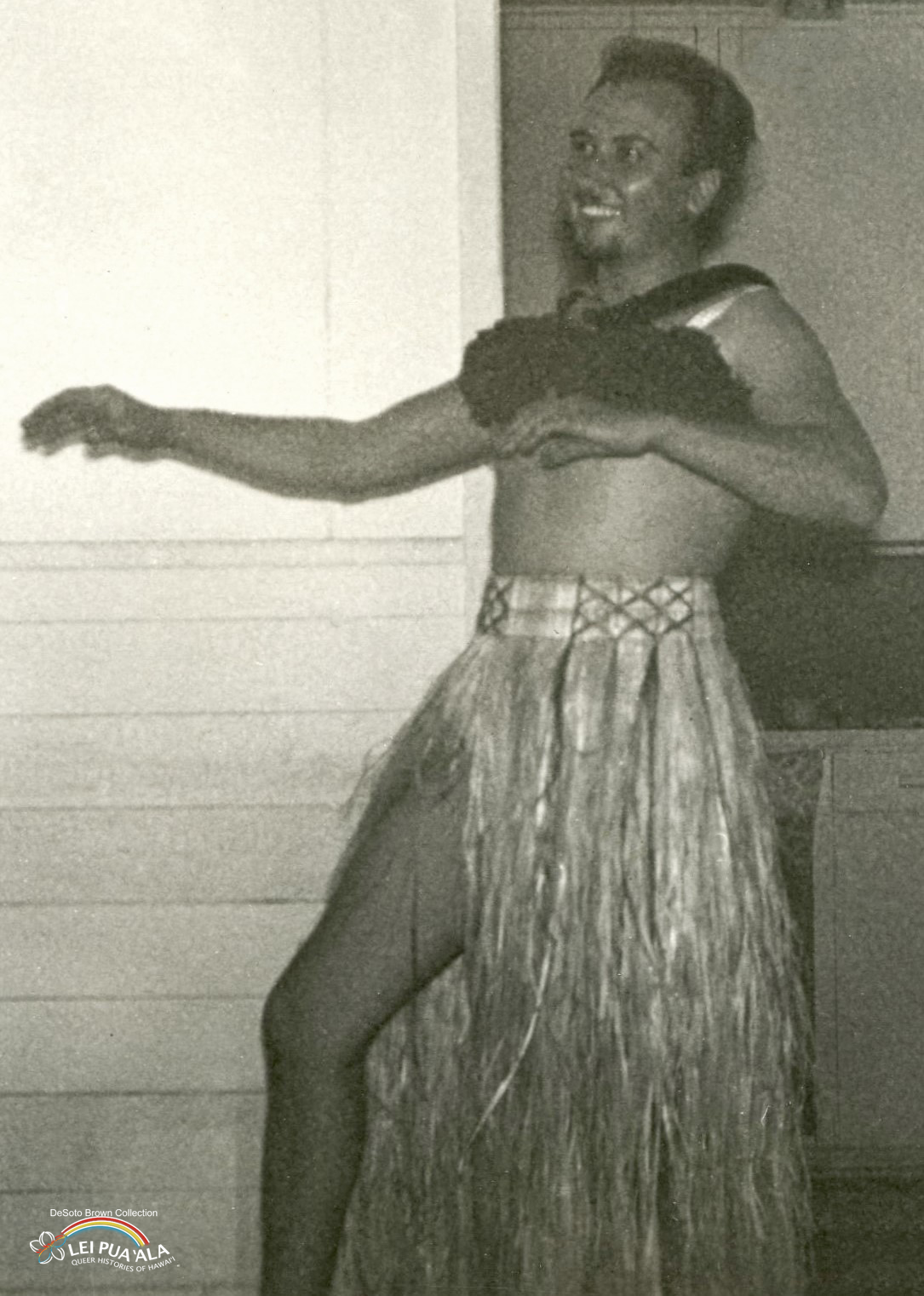
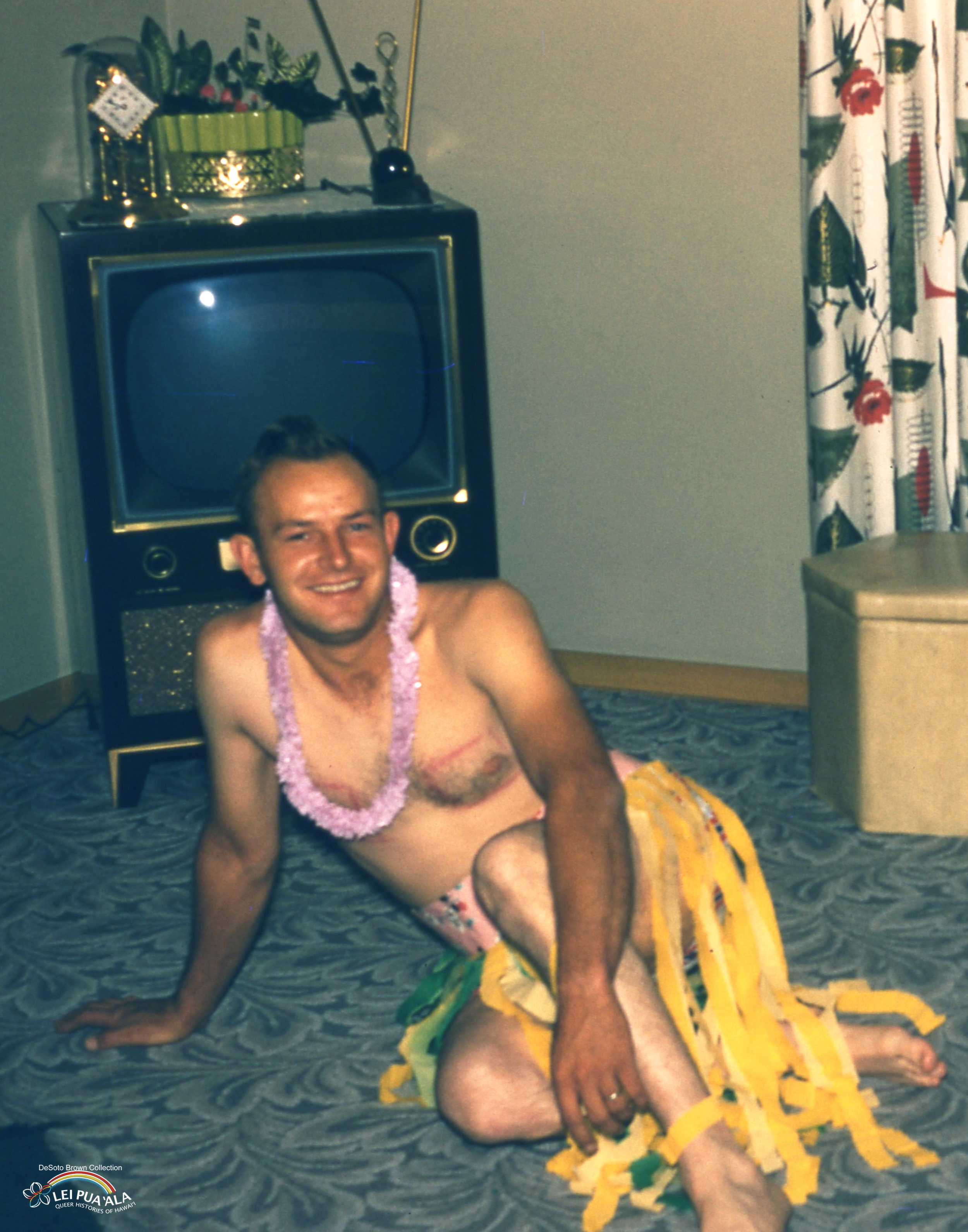
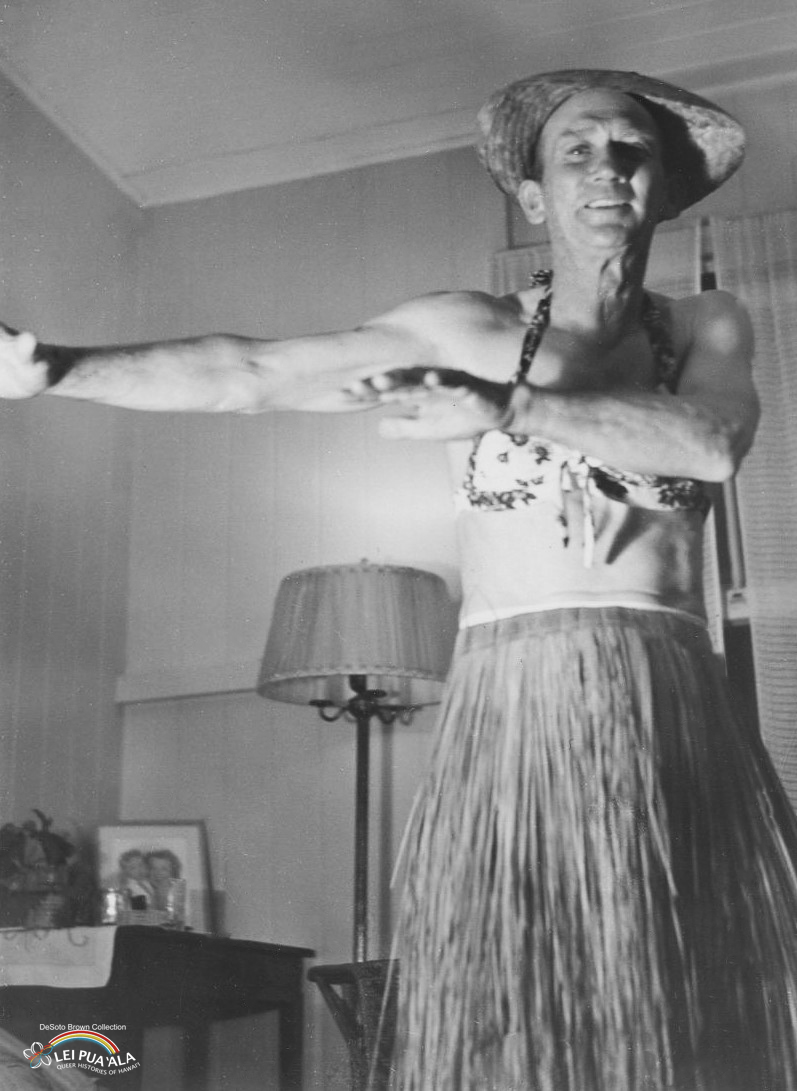
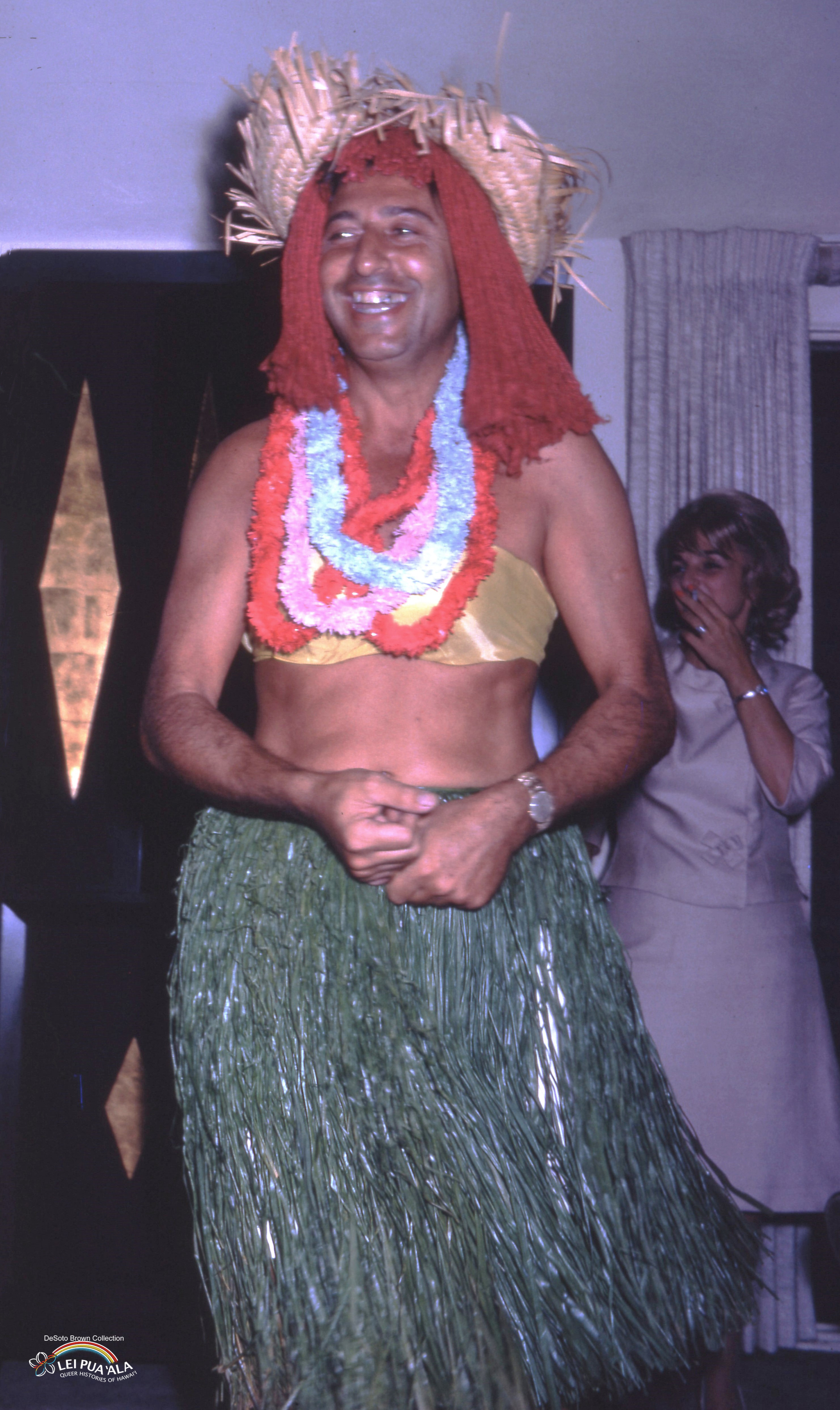
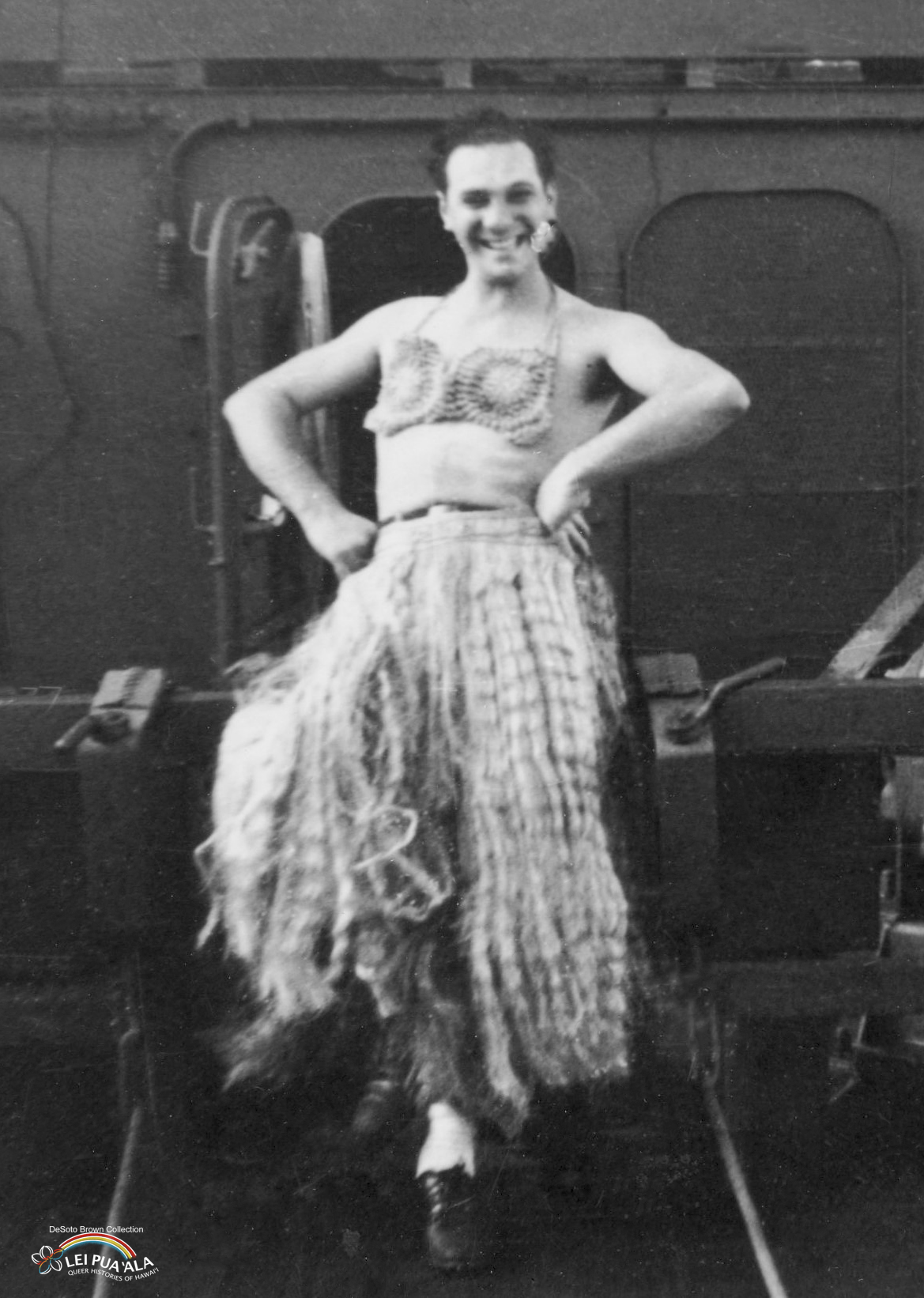
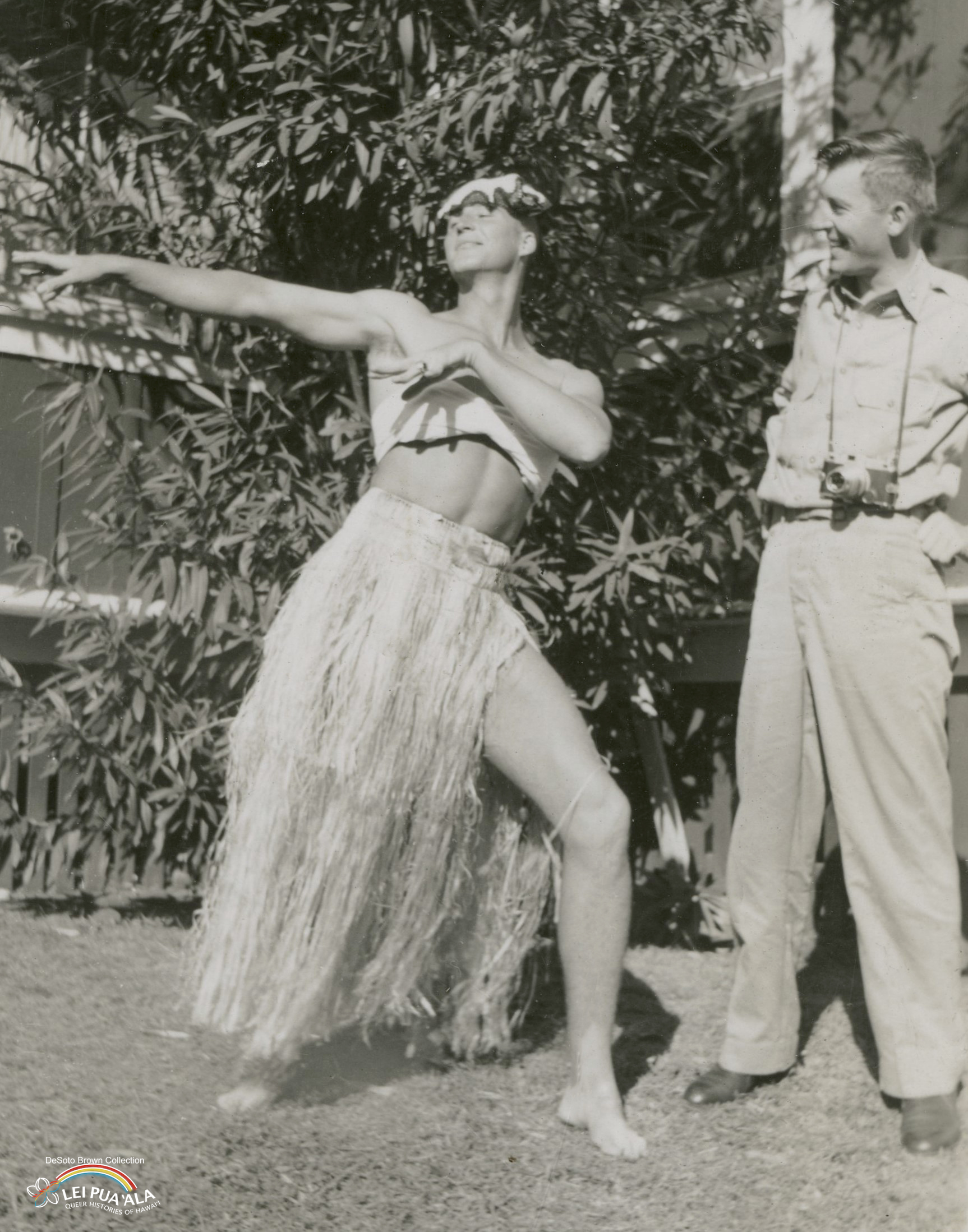
Many aspects of Hawaiian culture have been appropriated by outsiders for their own entertainment. As these photos show, this has certainly been the case for the hula.
While the hula in indigenous tradition can be performed for amusement or fun, more significantly it is a usually a matter of serious study and rigorous training by both men and women. A specific hula can be danced to accompany a mele (song) that honors a particular person, place or incident. Movements of the feet, legs, and torso are the accompaniment to what the arms and hands do, since the latter in particular are what demonstrate or enact the words of the mele being danced to.
Starting in the late 1800s, traveling Hawaiian musicians and hula dancers moved across the United States and into other countries, performing for audiences which welcomed their unique sound and styles. Some began to tailor their acts to what these foreign customers wanted or asked for, but more importantly, non-Hawaiians quickly copied what the Hawaiians were successfully doing on stage. In turn, in the hands of these imitators, the hula in particular could became a sad travesty of itself, often reduced to suggestive or outright sleazy misinterpretation.
Once the concept of the “hula dancer” took its place in American pop culture, anyone could put on a grass skirt and do a tacky bump & grind for the laughs of onlookers. And surprisingly, such performances in the USA were staged usually by men in a kind of accepted drag gag. This was all done with a kind of “no homo” attitude with everyone involved pretending that nothing approaching actual homosexuality was happening. It was all just a joke, right? Don’t take it the wrong way!
These photographs date from the 1920s through the 1970s and provide a small hint of how widespread the “drag hula” was in 20th century America. Some were taken in Hawaiʻi, and some show military men, but the rest are just average guys showing off. It’s remarkable what a mere costume can allow people to do while bending the rules in ways that otherwise would be unacceptable to many people.
All images from the DeSoto Brown Collection.