

Bill Cox:
A Journalist With AIDS
In September 1986, at a time when a new, mysterious, highly fatal immune disorder most often associated with gay men was surrounded by fear, misinformation, and intense stigma, Honolulu Star-Bulletin managing editor Bill Cox made a powerful decision: He would tell the public that he had AIDS.
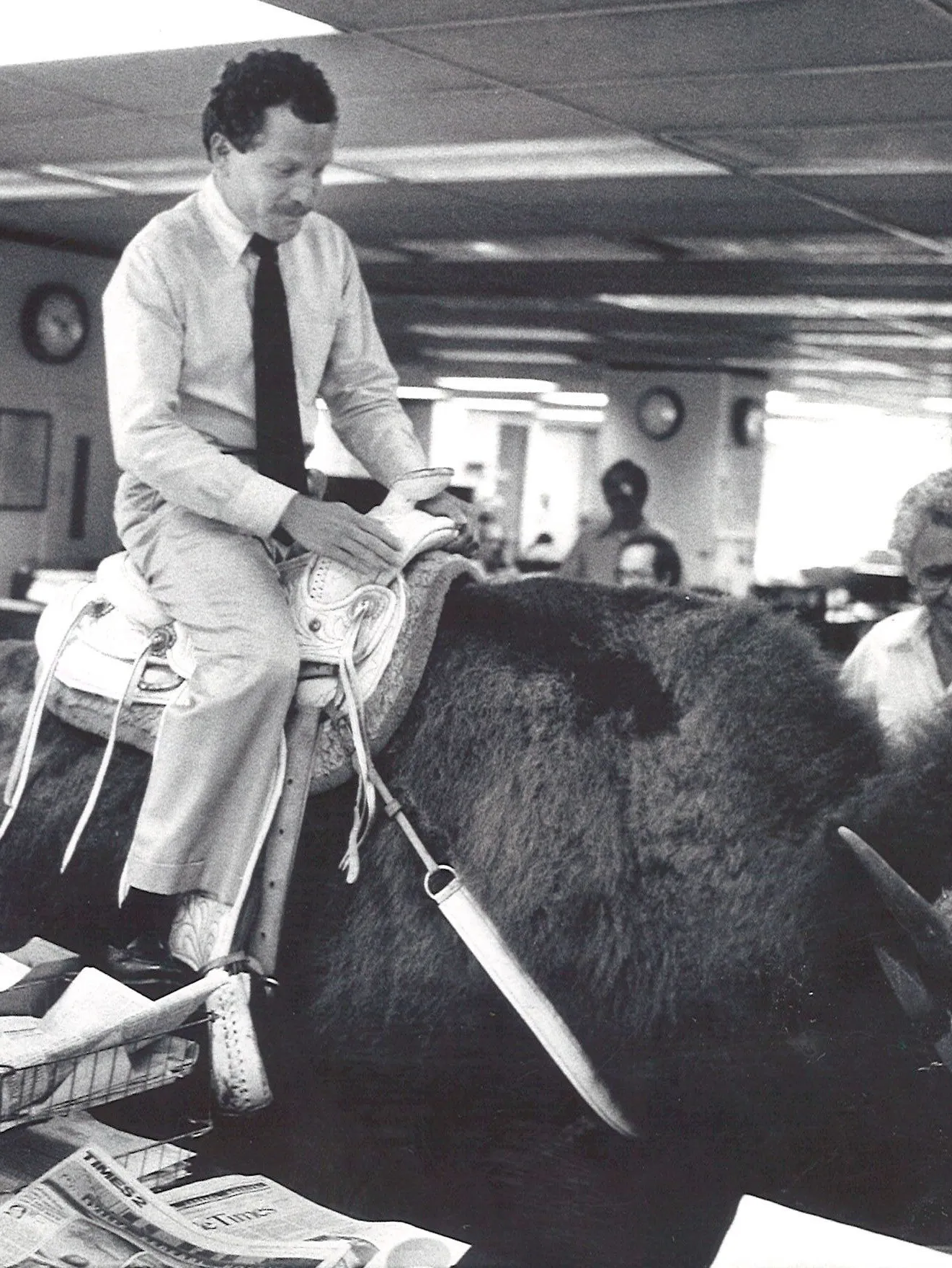
Cox, 37, had arrived in Hawaiʻi in 1984 after a distinguished, if unorthodox, journalism career at the Louisville Courier Journal. Known for his colorful pranks, he once mounted a bison brought to the newsroom by a promoter, rode it up a freight elevator and into the executive editor’s office.
At the Star-Bulletin, he quickly became known as an editor dedicated to holding government accountable to the people and for leading investigations into environmental, consumer, and public safety issues.
But in 1986, his own life became the story.
In a September 1 column titled “A Journalist With AIDS,” Cox announced that he was leaving his position because of his illness. At a time when many people with AIDS concealed their diagnoses rather than risking discrimination, isolation, and the loss of family and community, Cox understood the power of his voice.

He was the first journalist in the country to disclose that he was a gay man with AIDS, and he soon appeared on network television programs and was profiled by newspapers and magazines around the world, including The New York Times and Washington Post.
“His frank announcements drew comment from many other editors,” wrote the Star-Bulletin. “Many told him that having someone in their ranks with the disease had caused them to rethink personal and professional attitudes toward it and their coverage of it.”

The New York Times, September 2, 1986

Honolulu Advertiser editorial , September 3, 1986
For Cox, journalism had always been about confronting subjects that others preferred to ignore. “By writing about AIDS,” he wrote, “I am following a tradition of journalists who have written about their illnesses to help educate… and to help others with the disease feel less alone.” He added that he had spent his career “trying to shed light in dark corners.” AIDS, he said, was “one of our darkest corners” and could use some light.
After leaving the Star-Bulletin, Cox moved to California and continued to speak to journalism organizations about media coverage of AIDS. He died in 1988 at just 39 years old.


Honolulu Star-Bulletin, May 20, 1988
Today, Bill Cox's story has largely been forgotten. But like so many people’s response to HIV/AIDS in Hawaiʻi, he approached this public health crisis with compassion, using his position to put a human face on an epidemic that was too often discussed elsewhere without any humanity at all.

Associated Press article published in the Honolulu Star-Bulletin, January 15, 1987
Story compiled by Joe Wilson
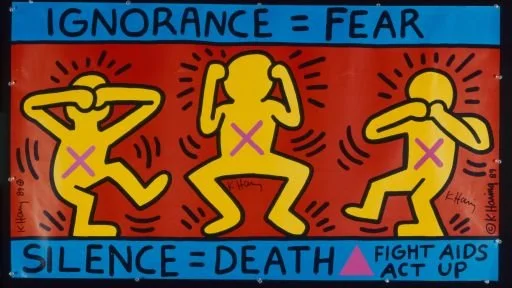
Banner image is a poster produced by Keith Haring (1958 - 1990) on behalf of the New York-based AIDS activist group AIDS Coalition to Unleash Power (ACT UP)